 sidsynth
01
Start from a patch you can change without regret. Save a copy first if the sound matters.
Les Lèvres De Poulet · le chef musical · gastronomie et technologie
Recipes for sound, served with a little seasoning. No need to turn every knob to eleven.
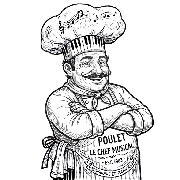
Bonjour. I am Chef Musical, and this kitchen does not believe in secret sauces. The user manual tells you what each control does. This book shows one honest way to put them to work. Each recipe begins with a sound in mind, a short list of ingredients, and an order of operations.
These are starting points, not sacred values. Your register, your hands, and your host all matter. Listen after each step. Change one ingredient at a time. If a dish sounds wrong, the remedy is usually less complicated than the recipe.
Chef's rule: if you cannot hear which change helped, you changed too many things at once.
A word before the first bite: mon dieu, do not enable Sync and Ring together just because both switches are nearby. Choose the effect you came for.
Start from a patch you can change without regret. Save a copy first if the sound matters.
Turn the master down before adding drive or several layers. Raise it after the sound is balanced.
Unless a recipe says otherwise, begin in Layer mode. Pulse width stays between 5% and 95%.
Switch off unused oscillators. A quiet extra waveform is still an extra ingredient.
A compact bass whose pulse gently changes shape while the low-pass keeps it seated. PWM depth around 0.18, not maximum. The center of the note must remain.
Saw against saw, about a fifth up, sync on, and the mod wheel stirring oscillator 2's tune. Find the narrow range where the tone talks without becoming an alarm in a tiled kitchen.
Ring modulation, served short. Triangle or saw on oscillator 2, a unison, fifth, or octave, and a fast accent envelope. If it buzzes, change the interval before adding effects.
A pulse, a darker low-pass, and a filter envelope that opens on the attack. Positive low-pass depth, then stop. The first instant should be brighter than the body.
Three restrained oscillators, each with a place. The chord should bloom, and the dry sound should still be pleasant. Full chorus, reverb, and harmonics on every layer is a queue at the door, not width.
Noise only, a very short envelope, and a band-pass that decides whether the burst is a snap or a thump. Add a little bitcrusher or a little reverb after the dry hit works. Not both at full mix.
A simple short-envelope patch, rate 1/16, eight steps and five hits. Hold a small chord. This is a pattern, not a strum. Check the host tempo before you blame the rate.
Mono, not poly. Portamento on, glide rate around 4.5, and a modest aftertouch vibrato. The chef permits drama, not seasickness. A two-octave bend is a special effect, not the house setting.